


You walk in for one thing, scan a wall of bright red discount tags, and somehow leave with a cart full of items you never planned to buy. The receipt is longer than expected, the “savings” feel like a win, and yet the bank balance tells a different story. If this sounds familiar, you are not careless or bad with money — you are simply human. Sales are engineered to work on the way our brains are wired, and they do it remarkably well.
Understanding why we overspend during a sale is the first real defense against it. Once you can name the mental shortcuts and emotional triggers at play, the flashing banners lose much of their grip. This guide breaks down the psychology behind discounts, the tactics that nudge us toward the checkout, and the practical habits that help you spend on purpose instead of on impulse.
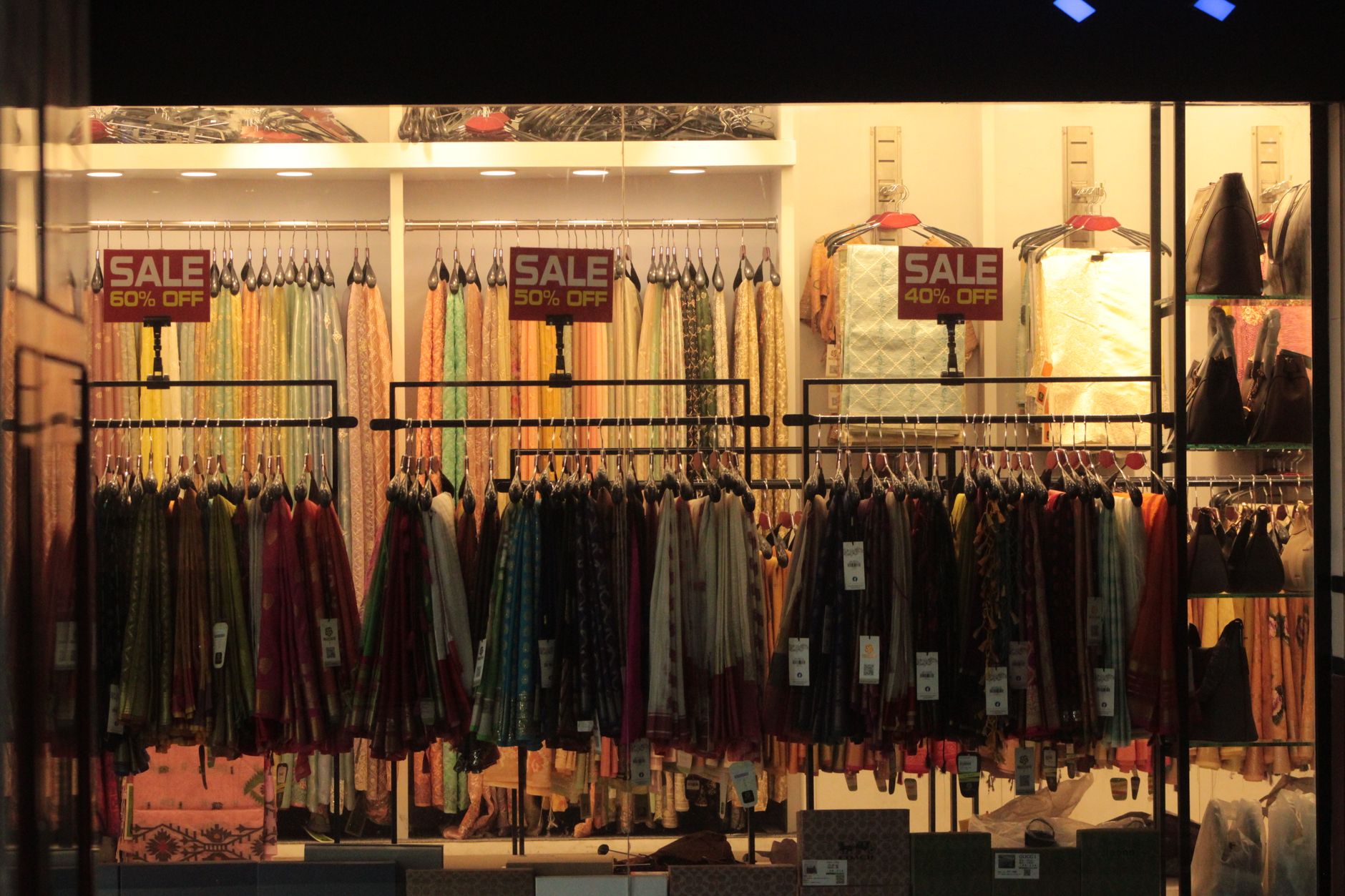
The Illusion of Saving Money
The core trick of any sale is a subtle shift in how we measure value. When a price drops from one number to a lower one, our attention locks onto the gap between them rather than the amount we are actually about to spend. A jacket marked down from $120 to $60 feels like a $60 gain, when in reality it is still $60 leaving your account.
Psychologists call this anchoring. The original, higher price acts as a reference point — an anchor — that makes the new price look like a bargain by comparison. The anchor doesn’t even need to be realistic. A product can be priced high specifically so it can be “discounted” later, and the perceived value still holds. The mind compares the two numbers it is shown, not the true worth of the item.
The danger is that saving money and spending money start to feel like the same activity. You can’t save your way to a lower balance by buying more, yet a good sale makes that contradiction feel logical in the moment. Retailers reinforce the illusion by showing the percentage off in large, bold type while the actual price you’ll pay sits in smaller print. The brain reads the big number first, and the headline figure — “50% off!” — sticks far more than the line that quietly states what you’ll hand over at the register.
This is also why crossed-out prices are everywhere. Seeing the old price with a line through it gives the discount a sense of legitimacy and movement, as if the value is actively flowing in your direction. The visual itself becomes part of the persuasion, doing work that the raw numbers alone never could.
Urgency and the Fear of Missing Out
Scarcity is one of the most powerful levers in all of marketing because our brains are loss-averse: the discomfort of missing out tends to outweigh the pleasure of gaining something equivalent. Sales lean on this hard, surrounding offers with cues designed to short-circuit careful thinking:
- Countdown timers that imply the deal will vanish in minutes.
- “Only 3 left in stock” messages that turn browsing into a race.
- Limited-time labels like flash sales or “today only” events.
- Exclusive access framed as a privilege you’d be foolish to waste.
When we feel time pressure, the rational, deliberate part of the brain gets sidelined in favor of fast, emotional decision-making. The result is a purchase driven less by genuine need and more by the fear that hesitation will cost us the opportunity. Often the same deal reappears weeks later — but in the moment, it feels like now or never.
How “Free” and “Bonus” Hijack Our Logic
Few words carry as much pull as free. The promise of something at no cost triggers an outsized emotional response, which is why offers like “buy two, get one free” or “free gift with purchase” are so effective. The free item feels like pure upside, and that glow spreads to the whole transaction.
The catch is that “free” almost always requires spending first. To unlock free shipping, you might add an extra item to clear a minimum threshold — spending $15 to avoid a $6 charge. To get the third item free, you buy two you may not have wanted. The bonus reframes the decision so that the additional spending feels like a clever move rather than an extra expense.
This is why thresholds work so well. A “free shipping over $50” line turns a $38 cart into a hunt for $12 more, and that scramble rarely lands on something you actually needed.
The Emotional Side of Spending
Shopping is rarely a purely practical act. Buying something — especially at a discount — can deliver a small hit of dopamine, the brain chemical tied to reward and anticipation. The thrill often peaks before the purchase, in the moment of imagining the item as ours, which is part of why the excitement can fade so quickly once we get home.
Several emotional currents feed overspending during sales:
- Stress relief — shopping as a way to self-soothe after a hard day.
- The thrill of the hunt — the satisfaction of “winning” a great deal.
- Identity and aspiration — buying the version of ourselves we hope to become.
- Social proof — wanting what others are visibly buying or recommending.
None of these impulses are flaws. They become a problem only when sales tactics amplify them, turning a passing feeling into a financial decision we wouldn’t make with a clear head. A discount can act as permission — a reason to act on an emotion we might otherwise let pass. “It’s on sale” quietly silences the inner voice that would normally ask whether we need the thing at all, because the price itself feels like justification enough.
It helps to notice the mood you’re in when the urge to buy strikes. Boredom, frustration, and even celebration all push us toward spending in different ways. The purchase rarely fixes the underlying feeling for long, which is why the satisfaction tends to fade fast and the next sale starts to look appealing all over again.
The Hidden Cost of a “Good Deal”
Even a genuine discount can be a poor decision if the item doesn’t fit your life. The cheapest purchase is always the one you didn’t need to make. A useful way to cut through the noise is to weigh the true cost rather than the advertised savings:
- Would I buy this at full price? If the answer is no, the discount — not the item — is what’s tempting you.
- Will I actually use it? An unused bargain has a cost-per-use of infinity.
- Is there a hidden cost? Storage space, maintenance, or accessories the item quietly requires.
- What is the opportunity cost? Money spent here is money unavailable for something you value more.
Reframing the question from “How much am I saving?” to “How much am I spending, and on what?” restores the part of decision-making that sales are designed to bypass. The goal isn’t to never enjoy a deal — it’s to make sure the deal is serving you, not the other way around.
Practical Ways to Outsmart the Sale
Awareness alone helps, but a few simple habits make a real difference when the discounts start calling. None require iron willpower — they work by adding friction and clarity at the exact moments our defenses are weakest:
- Make a list first. Decide what you need before you see what’s on offer, and treat the list as the plan.
- Use a waiting period. Give non-essential purchases 24 to 48 hours; most urges fade once the timer pressure is gone.
- Calculate the real spend. Ignore the percentage off and look only at the dollar amount leaving your account.
- Unsubscribe from temptation. Fewer promotional emails and notifications mean fewer manufactured emergencies.
- Set a budget before browsing. A spending cap decided in advance is far easier to honor than one improvised at checkout.
Over time these small practices rewire your default response. Instead of reacting to every banner, you start approaching sales with a plan — and a plan is exactly what marketing pressure is designed to dissolve.
Frequently Asked Questions
Why do sales make me feel like I’m losing money if I don’t buy?
That feeling comes from loss aversion — our brains treat a missed deal as a loss rather than a neutral non-event. The discomfort is real, but the “loss” is imaginary; you can’t lose money you never intended to spend.
Are discounts ever genuinely worth it?
Absolutely. A sale on something you already planned to buy is a true win. The trouble starts when the discount itself, rather than a real need, becomes the reason for the purchase.
How can I tell if a “sale price” is real?
Check the item’s price history when you can, and notice whether the “original” price ever seems to apply. If a product is permanently on discount, the higher figure is likely just an anchor designed to look generous.
Is impulse buying a sign of poor self-control?
Not really. Impulse buying is a normal human response to well-designed triggers, not a character flaw. Building simple habits — like a waiting period — is far more effective than relying on willpower alone.
The Takeaway
Overspending during a sale isn’t a personal failing — it’s the predictable result of clever psychology meeting an ordinary human brain. Anchored prices, ticking timers, the magic of the word “free,” and the quiet emotional pull of shopping all work together to make spending feel like saving. The antidote isn’t guilt or extreme restriction; it’s awareness. When you can recognize the trigger as it happens, pause long enough to ask what you’re really spending, and shop from a plan instead of a feeling, the sale stops controlling you. Discounts become a tool you use deliberately — and that clarity is worth more than any percentage off.