

Standing in front of an open cupboard at six in the evening, with no clear idea of what to make for dinner, is a familiar feeling in most households. The shelves might be far from empty, yet nothing seems to combine into an actual meal. The problem usually isn’t a shortage of food — it’s a shortage of the right building blocks, the everyday staples that quietly turn whatever fresh ingredients you have into something worth eating.
A well-stocked pantry fixes this. It’s not about hoarding or filling every inch of space with cans you’ll never open. It’s about keeping a thoughtful core of versatile ingredients on hand so that cooking becomes faster, cheaper, and far less stressful. This guide walks through what truly belongs in a working pantry, how to organize it, and how to keep it stocked without waste.
What Makes a Pantry “Well-Stocked”?
A well-stocked pantry is a curated collection of shelf-stable ingredients that combine into a wide range of meals. The goal isn’t quantity — it’s coverage. With the right base of grains, fats, seasonings, and proteins, you can pull together a satisfying dinner even on a night when the fridge looks bare.
The key word is versatility. Every item earns its place because it works in multiple dishes, not just one. A bag of rice, a can of beans, and a few spices can become a dozen different meals depending on what fresh produce you add. That flexibility is what separates a functional pantry from a cluttered one packed with single-use specialty items that gather dust.
The Foundation: Grains and Starches
Grains and starches form the backbone of nearly every meal, supplying both bulk and energy at a low cost. They store for months, scale easily, and stretch a small amount of protein into a full plate. A dependable starter set includes:
- Rice — white, brown, or both; the most adaptable starch you can own.
- Pasta and noodles — a couple of shapes cover everything from quick weeknight bowls to baked dishes.
- Oats — for breakfast, baking, and even thickening.
- Flour — all-purpose at minimum, for bread, sauces, and coating.
- Dried lentils or a second grain like quinoa or couscous for variety.
Because these items keep so well, it makes sense to buy them in reasonable bulk. Stored in a cool, dry place — ideally in sealed containers — they’ll stay fresh long enough that you rarely run out at an inconvenient moment.
It also helps to think about how each starch behaves so you can match it to your cooking. Rice and couscous are quick and neutral, ready to soak up whatever sauce you pour over them. Pasta cooks in minutes and forgives a thin fridge. Oats and lentils, meanwhile, lean hearty and filling, making them ideal when you want a meal to stretch further. Keeping two or three different textures on hand means you’re never stuck preparing the same plate twice in a week.
Building Flavor: Oils, Acids, and Seasonings
If grains are the body of your cooking, seasonings are the personality. The same plain bowl of rice and beans can taste completely different depending on what you add. This category is where small quantities deliver the biggest impact:
- Fats: a neutral cooking oil and a good olive oil cover frying, roasting, and dressing.
- Acids: vinegar and lemon brighten almost anything and balance rich dishes.
- Salt and pepper: the non-negotiable foundation of seasoning.
- Dried herbs and spices: start with cumin, paprika, oregano, chili flakes, and garlic powder.
You don’t need a wall of spice jars. A focused set of seasonings you actually use beats a sprawling collection that goes stale before you reach the bottom. Buy spices in small amounts, since they lose potency over time, and replace them once their aroma fades.
A few flavor-boosters are worth adding once the basics are covered, because they punch well above their size. A jar of mustard, a bottle of soy sauce, and a spoonful of honey or a similar sweetener give you the three core directions of taste — sharp, savory, and sweet — that round out almost any dish. With those on the shelf alongside your acids and oils, you can adjust the balance of a meal on the fly instead of settling for whatever comes out of the pot.
Reliable Proteins and Canned Goods
Shelf-stable proteins are what let you cook a real meal when fresh meat or produce isn’t on hand. They’re inexpensive, keep for a long time, and slot into countless recipes with almost no preparation. A solid backup supply includes:
- Canned beans and legumes — chickpeas, black beans, and lentils for instant protein.
- Canned tomatoes — the base for sauces, soups, and stews.
- Canned fish — tuna or sardines for quick, protein-rich meals.
- Broth or stock — to build flavor in soups, grains, and sauces.
These items are the quiet heroes of a pantry. When a plan falls through or the week runs long, a few cans and a pot of rice can rescue dinner in fifteen minutes. Keep enough on hand for two or three improvised meals, and replace each item as you use it.
One detail worth keeping in mind is sodium. Many canned goods are seasoned heavily during processing, so it helps to rinse beans before using them and to taste a sauce before adding extra salt. Choosing lower-sodium versions where you can gives you more control over the final dish. Treated this way, canned staples deliver convenience without forcing a compromise on how the food actually tastes.
Organizing for Everyday Use
A pantry only works if you can see what you have. The most common cause of waste isn’t buying too little — it’s buying duplicates of things hidden at the back, while older items quietly expire out of sight. A few habits keep everything visible and usable:
- Group by category. Keep grains together, canned goods together, and seasonings in one zone so you always know where to look.
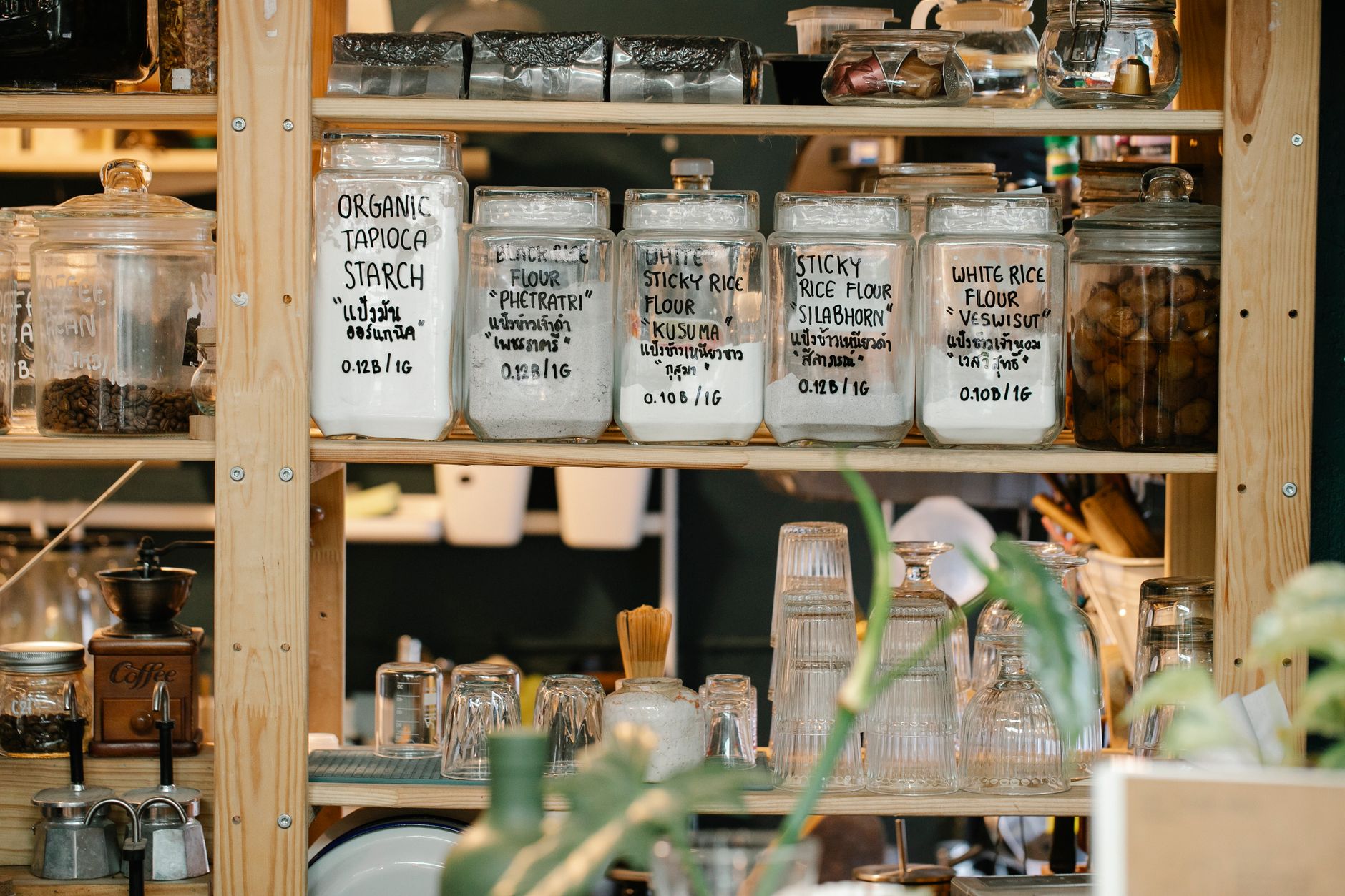
- Decant where it helps. Clear containers for flour, rice, and pasta make levels easy to check at a glance.
- Practice “first in, first out.” Move older items to the front so they get used before newer ones.
- Label with dates. A quick note on opened jars and decanted staples prevents guesswork later.
Good organization does more than look tidy — it actively saves money. When you can see your inventory, you stop double-buying and start cooking from what you already own.
Keeping It Stocked Without Waste
A well-stocked pantry isn’t a one-time shopping trip; it’s a rhythm. The aim is to replace staples as they run low rather than letting everything empty at once or overbuying out of anxiety. A simple system keeps the supply steady without creating clutter:
- Keep a running list. Jot down a staple the moment it gets low, not after it’s gone.
- Shop your pantry first. Before buying, plan a meal or two around what’s already there.
- Buy versatile over specialty. Choose ingredients that fit many recipes instead of one-off items.
- Rotate seasonally. Adjust what you keep as your cooking shifts through the year.
Over a few months, this approach changes your relationship with the kitchen. You waste less, you spend less on last-minute takeout, and you almost always have the makings of a meal. The savings come not from one big haul, but from rarely letting good food spoil unused.
Frequently Asked Questions
How many items does a well-stocked pantry need?
There’s no fixed number. Most kitchens run comfortably on twenty to thirty core staples spread across grains, fats, seasonings, and canned goods. Start with the basics and add only what you reach for repeatedly.
How long do pantry staples actually last?
It varies. Dried grains and pasta keep for a year or more when sealed and dry, canned goods often last a couple of years, and spices stay potent for roughly six months to a year. Check labels and trust your senses.
What’s the best way to prevent pantry waste?
Visibility and rotation. Keep older items at the front, store things in clear containers, and shop from what you already have before buying more. Most waste comes from forgetting what’s hidden in the back.
Do I need expensive or specialty ingredients?
No. A strong pantry is built on affordable, versatile basics. Specialty items are nice for specific recipes, but the everyday workhorses — rice, beans, oil, and a few spices — do most of the cooking.
The Takeaway
Stocking a pantry well isn’t about filling every shelf — it’s about clarity. When you keep a focused core of grains, fats, seasonings, and shelf-stable proteins, every meal becomes easier to assemble and every grocery trip becomes more deliberate. Organize so you can see what you have, replace staples as they run low, and lean on versatile ingredients that work across many dishes. Do that, and a modest set of essentials will quietly outperform a crammed, chaotic cupboard — saving you time, money, and the nightly stress of figuring out what’s for dinner.