

Some rooms feel warm and open the moment you walk in, while others stay stubbornly dim no matter how many lamps you switch on. If you live in a space with small windows, a north-facing wall, or a layout that traps shadows in the corners, you already know the frustration: the light is technically there, but it never seems to spread. The instinct is usually to add more bulbs, yet that often leaves a room feeling either harshly lit or unevenly glowing rather than genuinely bright.
This is where mirrors earn their reputation as one of the most effective decorating tools you can own. A well-placed mirror doesn’t just reflect your face — it bounces daylight deeper into a room, multiplies the glow of a single lamp, and creates the illusion of extra space and air. Best of all, the technique relies on placement and intention rather than expense. This guide walks through how mirrors actually brighten a room and how to use them with purpose so the effect looks deliberate instead of accidental.
Why Mirrors Make a Room Feel Brighter
A mirror brightens a space through a simple principle: it redirects light that would otherwise be absorbed by walls, floors, and furniture. Most surfaces in a home soak up a portion of the light that hits them, which is why a room with dark paint and heavy textiles can feel like it’s swallowing every lamp you add. A mirror, by contrast, returns nearly all of that light back into the room.
There are two distinct effects working at once. The first is reflection — the mirror catches a window or a light source and throws those rays across the space. The second is perceived depth. By showing a continuation of the room (or the view outside), a mirror tricks the eye into reading the area as larger and more open, which our brains naturally associate with brightness and air.
It also helps to understand how this differs from simply adding paint or lighting. Light paint reflects more than dark paint, but it still absorbs a meaningful share of every ray. A mirror returns light at full strength and aims it somewhere useful, which is why a single mirror can outperform an entire wall repainted a shade lighter. The two strategies work beautifully together, but the mirror is the part that actively moves light around the room rather than just refusing to absorb it.
Placing Mirrors to Catch Natural Light
The single most impactful move is positioning a mirror to interact with your windows. Daylight is the brightest, most flattering light you have, so capturing and spreading it pays off more than any other strategy. A few reliable approaches:
- Opposite a window — hang a mirror on the wall facing your main window so it pulls the view and the daylight straight back into the room.
- Perpendicular to a window — placing a mirror on an adjacent wall sweeps light sideways into shadowy corners that the window alone can’t reach.
- Near a doorway — a mirror just inside an entry borrows light from a brighter adjoining room or hallway.
Before committing to a nail in the wall, prop the mirror up and watch how it behaves at different times of day. Light shifts dramatically between morning and afternoon, and the goal is a soft, even spread rather than a single blinding hotspot of glare aimed straight at where you sit.
Choosing the Right Size and Shape
Bigger is usually brighter. A large mirror reflects more light and more of the room, which is why a single generous piece often outperforms a cluster of small ones for the purpose of opening up a space. A full-length or oversized mirror leaned against a wall can make a cramped room read as significantly larger.
That said, shape matters for the mood as much as the math:
- Rectangular and tall mirrors emphasize height, ideal for rooms with low ceilings.
- Round or oval shapes soften a space full of hard lines and add a gentle, organic feel.
- Arched mirrors lend a sense of architecture and elegance, mimicking a window or doorway.
Frames count too. A slim or frameless mirror disappears into the wall and keeps the focus purely on light and reflection, while a bold frame turns the mirror into a decorative focal point in its own right. Match the frame to the room’s existing tones so the piece feels integrated rather than tacked on.
If you’re decorating an entire wall rather than a single spot, consider the proportions carefully. A mirror that spans most of a wall reads as a design feature and dissolves the boundary of the room, while one that floats awkwardly in the middle of a large blank surface can look undersized and lost. As a rough guide, let a wall-hung mirror occupy a generous portion of the space above whatever furniture sits beneath it, leaving a comfortable margin on either side so it feels anchored rather than stranded.
Multiplying the Glow of Lamps and Candles
Mirrors aren’t only daytime tools. After sunset, they can dramatically stretch the warmth of your artificial lighting. Positioning a mirror behind or beside a light source effectively doubles its output, which is especially useful in cozy evening spaces where you want ambiance without flooding the room in overhead light.
Try these pairings to make the most of the effect:
- Behind a table lamp — a mirror on the wall behind a lamp reflects the bulb and spreads a softer, wider pool of light.
- Near candles or string lights — small flames and fairy lights appear to multiply, creating a gentle, sparkling glow.
- Across from a fireplace — a mirror catches firelight and carries that flickering warmth into the rest of the room.
The key is to reflect the light, not the bare bulb pointed directly at eye level. Aim for the mirror to catch the glow and disperse it, so the room feels luminous rather than dotted with distracting bright spots.
Building a Mirror Gallery or Statement Wall
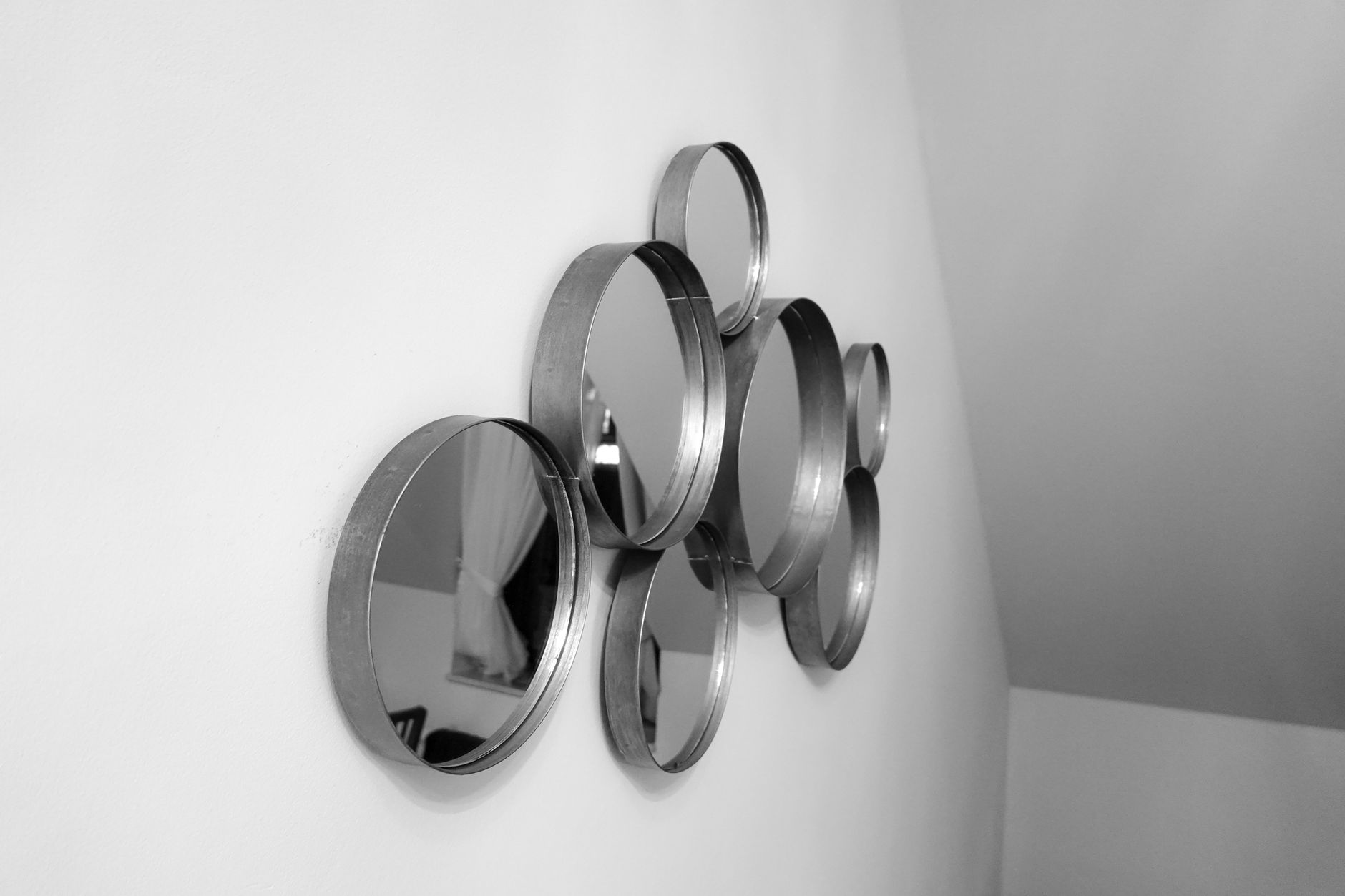
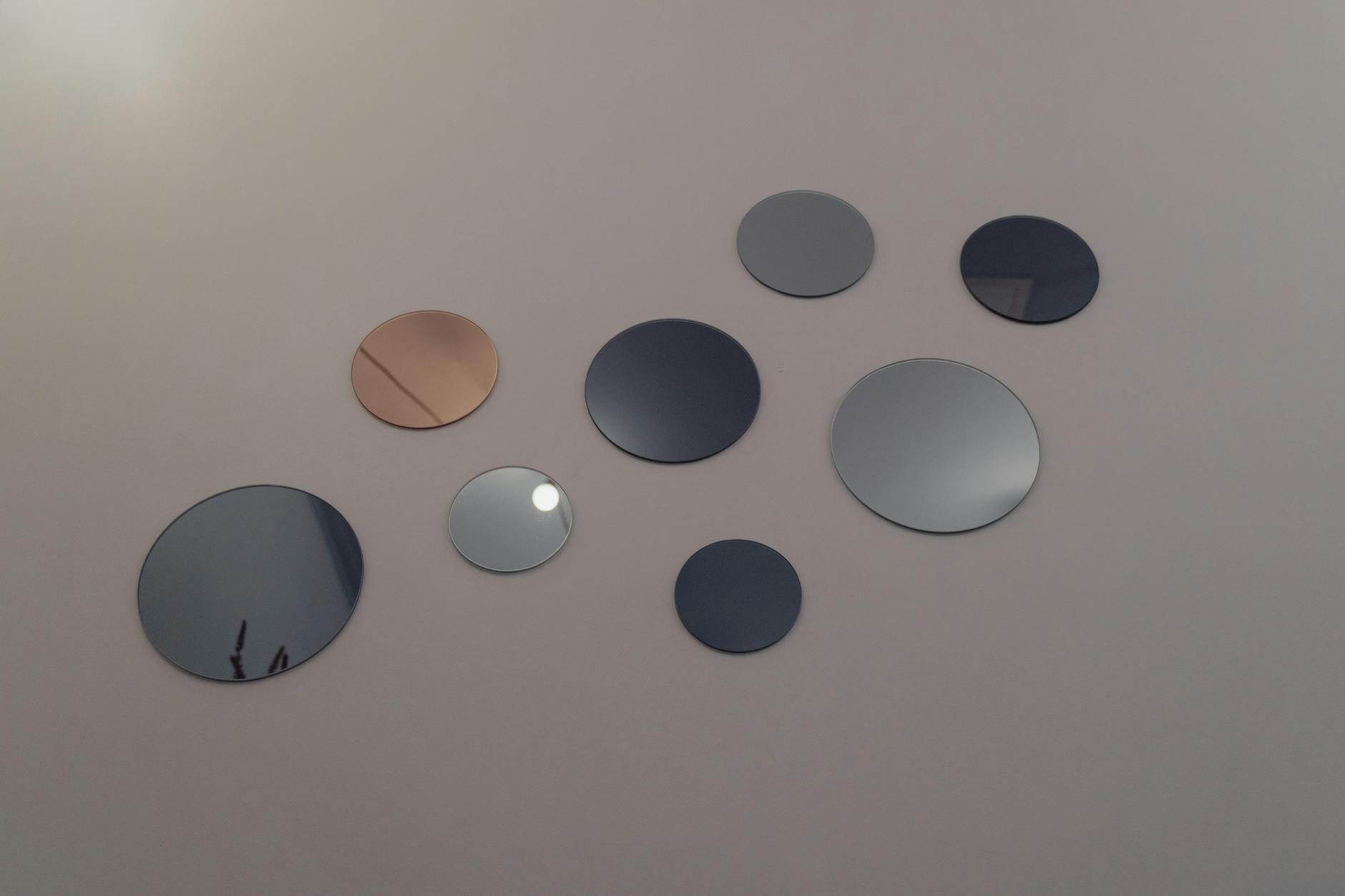
When a single large mirror isn’t practical, a grouping can deliver both light and personality. A collection of smaller mirrors arranged together reflects light from multiple angles and adds visual interest to an empty wall. The trick is to treat it like an art arrangement: vary the sizes, but keep the frames in a related finish so the cluster reads as intentional.
You can also mix mirrors into an existing gallery wall of framed prints and photos. Slotting two or three mirrors among the artwork breaks up the solid surfaces with reflective gaps that catch and scatter light throughout the day. This works particularly well in narrow hallways and stairwells, which tend to be the darkest, most overlooked corridors in a home and benefit enormously from a little borrowed brightness.
Common Mistakes to Avoid
Mirrors are forgiving, but a few missteps can undercut the brightening effect or make a room feel busy. Keep an eye out for these:
- Reflecting clutter. A mirror doubles whatever sits in front of it. Aim it at a window, a plant, or open space — never at a messy pile or a tangle of cables.
- Hanging too high. A mirror placed above eye level often reflects the ceiling and loses its purpose. Center it on what you actually want to amplify.
- Creating glare. A mirror angled to throw harsh sunlight onto a screen or seating area becomes an irritation rather than an asset.
- Overdoing it. Too many mirrors in one room can feel disorienting. A few purposeful pieces beat a wall of reflective surfaces.
A quick test solves most of these: sit where you normally relax and look at the mirror from that spot. If it shows you something pleasant and bright, it’s working. If it shows you a cluttered shelf or shines straight into your eyes, adjust before you hang it for good.
Frequently Asked Questions
Where is the best place to hang a mirror to brighten a dark room?
Directly opposite or beside a window is most effective, since the mirror captures daylight and spreads it across the space. If natural light is limited, position the mirror near your main lamp instead.
Does the size of the mirror really matter?
Yes. A larger mirror reflects more light and more of the room, so it has a stronger brightening and space-expanding effect than several small ones grouped together.
Can mirrors make a small room look bigger?
They can. By reflecting the room and adding visual depth, mirrors trick the eye into perceiving more space, which makes compact areas feel open and airier.
Is it bad to place a mirror facing another mirror?
It’s mostly a matter of taste. Two mirrors facing each other create an endless tunnel reflection that some people find striking and others find dizzying. For a calm, bright room, it’s usually best avoided.
The Takeaway
Brightening a room with mirrors isn’t about buying the most expensive piece — it’s about placement with purpose. When you position a mirror to catch daylight, multiply the glow of a lamp, and reflect something worth seeing, you turn an ordinary surface into a quiet source of light and space. Start by studying where the light already enters, point your mirror toward it, and avoid the few common traps like glare and clutter. Do that, and a single well-chosen mirror will do more to lift a dim room than a shelf full of extra lamps ever could.