

Plenty of people assume that a proper reading corner requires a spare room, a bay window, or a sprawling home with square footage to burn. So they keep meaning to “set one up someday” and, in the meantime, read in bed until they fall asleep or on the couch with the television flickering nearby. The truth is that a reading nook has very little to do with how much space you have. It has everything to do with how you arrange the small space you already own.
A good nook is really just a pocket of the home that signals to your brain that it’s time to slow down. It pairs a comfortable seat with the right light, a few thoughtful touches, and a deliberate boundary from the busier parts of your life. This guide walks through how to find that pocket, make it genuinely comfortable, and keep it inviting enough that you actually use it — whether you live in a studio apartment, a shared house, or a home with room to spare.

What Makes a Reading Nook Work
Before moving any furniture, it helps to understand what separates a real reading nook from just “a chair where you happen to read.” A nook works because it engages your senses in a way that quiets the mind and encourages focus. The most successful corners almost always share the same handful of ingredients.
- A supportive seat that you can sink into for an hour without aching.
- Good light positioned so the page is bright but your eyes aren’t strained.
- A sense of enclosure, even a partial one, that makes the spot feel set apart.
- A surface within reach for a mug, your glasses, or the book you just finished.
Notice that none of these depend on a large budget or a dedicated room. They’re about intention — choosing each element on purpose so the corner does its job. When those four pieces come together, even a sliver of floor space can become the spot you look forward to all day.
Finding the Right Spot
The first task is locating a corner with potential, and almost every home has at least one. Walk through your rooms and look for places that are slightly tucked away rather than in the middle of foot traffic. A corner of the bedroom, the end of a hallway, an unused dining alcove, or even the wide landing at the top of a staircase can all work beautifully.
Pay attention to two things in particular: natural light and quiet. A spot near a window gives you daytime reading without a lamp and a pleasant view to rest your eyes on. Distance from the kitchen, the front door, and the main walking paths keeps interruptions to a minimum. If your home is small, don’t despair — the goal isn’t a separate room, just a corner that feels a little removed from everything else.
It also helps to think about the corner’s existing character. A spot with a solid wall behind it naturally feels more sheltered than one floating in the open, and that subtle sense of being backed and protected does a lot for relaxation. If your best option is more exposed, you can borrow that feeling by angling a chair into the corner, tucking it beside a bookcase, or letting a tall plant or a folding screen stand in as a soft partition. The point is to create a spot that feels like its own small world, separate from the busier currents of the house.
Choosing Comfortable Seating
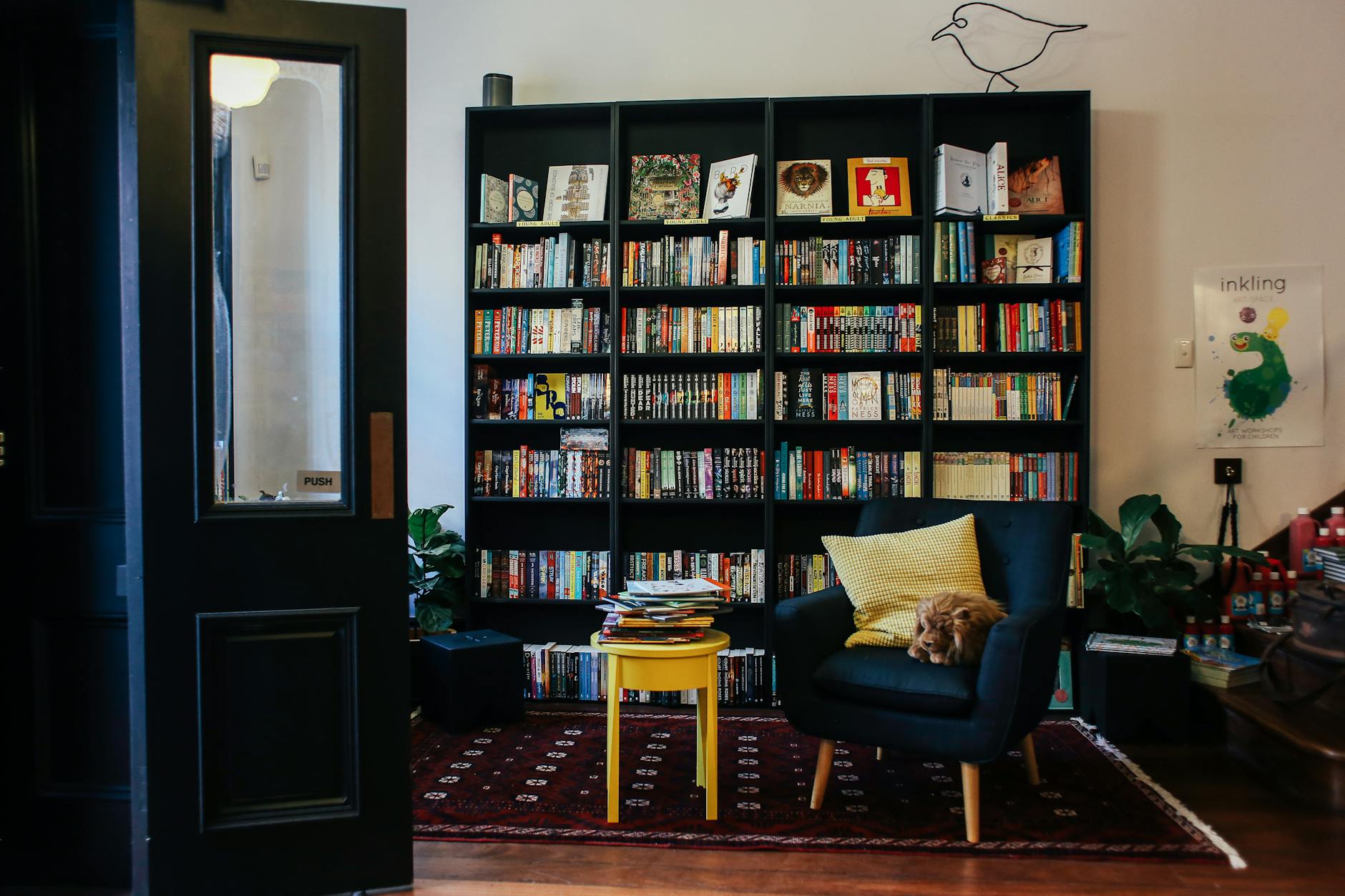
Seating is the heart of any nook, and the good news is that comfort matters far more than cost or style. The “right” chair is simply the one your body wants to stay in. A deep armchair is the classic choice, but a wide windowsill with a cushion, a beanbag, a padded bench, or a corner of the floor layered with pillows can all be just as inviting.
When you test a potential seat, sit in it the way you’d actually read — knees up, slouched, or curled sideways — rather than sitting upright like you’re posing for a photo. A few things make a big difference:
- Back support so you’re not constantly shifting to get comfortable.
- A place for your arms, whether that’s armrests or a cushion to prop a book against.
- Something soft underfoot, like a small rug, if your chair doesn’t fully cradle you.
If you’re working with what you already own, pulling an existing chair into a quiet corner and dressing it up with a throw and a couple of pillows is often all it takes. There’s no need to match a particular look or invest in a special “reading chair” — a kitchen chair softened with cushions or a floor cushion stacked against the wall can be every bit as comfortable as something purpose-built. What matters is that the seat invites you to stay, not that it photographs well.
Getting the Lighting Right
Lighting is the detail that beginners most often overlook, and it’s the one that quietly makes or breaks a nook. Read in dim light and your eyes tire within minutes; sit under a harsh overhead bulb and the mood evaporates. The aim is warm, focused light that falls onto the page from beside or behind you rather than glaring into your face.
During the day, position your seat so window light lands over your shoulder. For evenings, a dedicated reading light is worth prioritizing. An adjustable floor lamp, a swing-arm wall lamp, or a small table lamp with a warm bulb all do the job. Choose a “soft white” or “warm white” bulb rather than a cool, bluish one — the warmer tone is gentler on the eyes and far more relaxing as the day winds down. If you can, add a dimmer or a bulb with adjustable brightness so the light can shift with your mood.
Layering in Warmth and Texture
Once the practical bones are in place, texture is what turns a functional corner into a genuinely cozy one. Coziness is largely a matter of touch and softness — the more layers your eyes and hands encounter, the more the space invites you to settle in and stay a while.
- A throw blanket draped over the seat, ready to pull across your lap.
- A couple of cushions in varied sizes and fabrics for back and arm support.
- A small rug to define the nook and warm the floor underfoot.
- Natural materials like wood, wool, or woven baskets, which feel calmer than slick surfaces.
You don’t need everything at once. Even one soft throw and a single good cushion can transform a plain chair. The trick is contrast: mixing a smooth surface with a chunky knit, or a firm seat with a plush pillow, gives the corner the layered, lived-in warmth that makes reading there feel like a small reward.
Adding the Finishing Touches
The final layer is the personal one — the small details that make the nook unmistakably yours and gently reinforce that this is a place to read. None of these are strictly necessary, but together they’re what tempt you to actually use the spot rather than drifting back to the couch.
- A spot for books, whether a slim shelf, a stack on the floor, or a basket of current reads.
- A side surface for a drink, a candle, or your glasses, so nothing pulls you out of the story.
- A touch of greenery, like a small plant, to soften the corner and add a bit of life.
- One or two personal objects — a framed photo, a favorite mug — that make the space feel intentional.
Keep this layer restrained. A reading nook should feel calm, not cluttered, so resist the urge to fill every surface. A few well-chosen items do more for the mood than a dozen competing ones.
Frequently Asked Questions
How much space do I really need for a reading nook?
Surprisingly little. A single comfortable chair, a light source, and a small surface for a mug can fit in a corner roughly the size of a closet. The feeling of enclosure matters far more than the square footage.
I rent and can’t make permanent changes — can I still build one?
Absolutely. Almost everything that makes a nook cozy is removable: a chair, a floor lamp, a rug, cushions, and a throw. None of it requires drilling, painting, or anything your lease would object to.
What kind of lighting is best for reading at night?
A focused light with a warm-white bulb positioned beside or behind you. Avoid relying on a single overhead fixture, which tends to cast shadows on the page and feels harsher than a dedicated reading lamp.
How do I keep my nook from collecting clutter?
Give every item a home and keep surfaces mostly clear. A small basket for current reads and a single side surface for essentials usually covers what you need without letting odds and ends pile up.
The Takeaway
Building a cozy reading nook isn’t about having the perfect home — it’s about treating a small corner with a little intention. When you choose a quiet spot, settle on a seat your body loves, get the light right, and layer in a few soft, personal touches, even the tiniest pocket of space becomes somewhere you genuinely want to be. Start with the corner you already have, add comfort one element at a time, and you’ll find that the best reading nook isn’t the grandest one. It’s simply the one you keep coming back to.