


A cramped closet has a way of making the whole morning feel chaotic. Doors that won’t quite shut, a rod sagging under the weight of crammed hangers, and a floor that quietly collects shoes and stray laundry — it all adds up to a space that feels far more stressful than its square footage should allow. The frustrating part is that the issue is rarely the size of the closet itself. It’s how the available space is being used. Most closets, even tiny ones, hold far more empty air than their owners realize.
Most small closets waste a surprising amount of room: empty air above the top shelf, dead corners, and a single rod doing the job that two or three could handle. With a few thoughtful adjustments, even a tight reach-in or a narrow rental closet can hold more, stay organized longer, and make getting dressed feel calm instead of frantic. This guide walks through how to assess your space, edit your belongings, use vertical and hidden areas, pick the right hardware, and build habits that keep a small closet working in your favor for the long haul.

Start by Understanding Your Space
Before adding a single bin or hook, it helps to look at your closet with fresh eyes. Most people organize around the storage that came pre-installed — usually one rod and one shelf — without asking whether that layout actually fits what they own. Take everything out, give the empty closet a good look, and measure the real dimensions: width, depth, and especially the height from the rod to the ceiling. Jot those numbers down somewhere you can reference them later, because they’ll guide every product you consider.
That measuring step matters more than it sounds. The single biggest source of wasted space in a small closet is the unused vertical zone above the top shelf and below the hanging clothes. Once you can see those empty pockets clearly, the path to fitting more becomes obvious. Think of the closet as a three-dimensional box to fill efficiently, not just a rod to hang things on. It also helps to notice your own patterns while the closet sits empty: where clutter naturally piled up, which shelf you never reached, and what you dug for every morning. Those observations tell you where the system was failing and where to focus your effort.
Edit Before You Organize
No storage system can rescue a closet that’s simply holding too much. Before you optimize the space, reduce what goes back into it. Pull every item out and sort honestly into a few piles:
- Wear regularly — the pieces that earn their place and define your everyday routine.
- Occasional — seasonal or special-occasion items worth keeping but not worth prime real estate.
- Rarely or never — wrong fit, worn out, or forgotten. Be ruthless here.
The goal isn’t a bare closet; it’s a closet that only contains things you actually use. A small space stays organized far more easily when it isn’t packed to capacity. Aim to leave a little breathing room on the rod so clothes don’t wrinkle and you can see what you have at a glance. Editing first means every later improvement works harder, because it’s serving fewer, better-chosen items.
If parting with things feels difficult, try a middle step instead of an immediate decision. Box up the “rarely or never” pile, label it with the date, and store it out of the way for a few months. If you never reach for it, donating becomes an easy call. This trick removes the pressure of throwing things out on the spot while still freeing up the closet now, which is exactly what a tight space needs.
Go Vertical With Your Storage
Once the closet is pared down, the next move is to climb. Vertical space is the most underused resource in nearly every small closet, and reclaiming it can effectively double your capacity. A few reliable strategies:
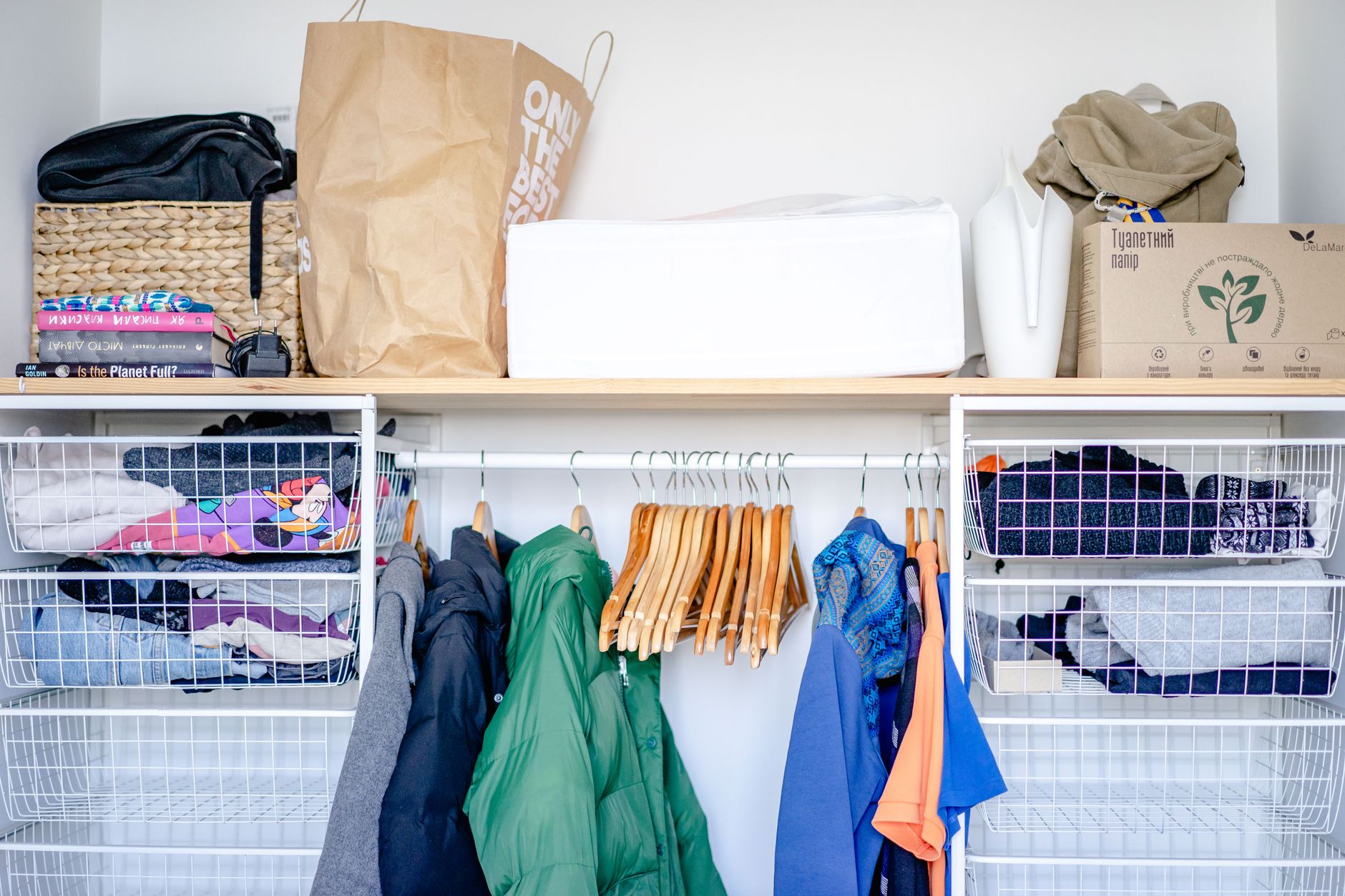
- Add a second rod. Hang a tension rod or a hanging double-rod extender below your existing one to create two tiers for shorter items like shirts, skirts, and folded pants.
- Use the wall above the shelf. A stack of bins, baskets, or a second shelf turns dead overhead air into storage for off-season clothes or extra linens.
- Hang organizers from the rod. Fabric shelf towers and hanging cubbies add structured space for sweaters, bags, or shoes without any tools.
- Reach the floor zone. Slim drawers, stackable boxes, or a low shoe rack keep the often-cluttered closet floor tidy and usable.
The principle is simple: every flat surface and every empty vertical gap is an opportunity. By filling them deliberately, you stop depending on that one overworked rod and spread the load across the entire space. When you double up rods, group like with like — fold-friendly items such as shirts and skirts go on the tiered section, while long dresses, coats, and trousers stay on a full-height rod elsewhere. Keeping similar lengths together also creates a cleaner sightline, which makes the whole closet feel larger than it is.
Choose Smarter Hangers and Containers
The hardware inside a closet has an outsized effect on how much it can hold. Bulky plastic and wooden hangers eat into precious rod inches, and mismatched ones make everything look more cluttered than it is. Switching to thin, non-slip velvet hangers is one of the quickest wins available — they can free up a third or more of your hanging space simply by taking up less width, and uniform hangers instantly make the closet feel calmer. The visual consistency does as much for the sense of order as the inches you reclaim.
Containers matter just as much. Clear bins let you see contents without rummaging, while labeled boxes work well for items stored higher up and out of reach. Drawer dividers tame the small-item chaos of socks, underwear, and accessories. A few guidelines worth keeping in mind:
- Match the container to the gap rather than buying generic bins and hoping they fit. Measure first.
- Favor square shapes over round baskets — they nest together and waste less space along walls and corners.
- Keep frequently used items at eye level and reserve high or low zones for things you reach for rarely.
One common mistake is buying storage before measuring, then forcing oversized bins into spaces they don’t suit. The result is wasted gaps around each container and a closet that somehow holds less than before. Resist the urge to shop until you know your exact dimensions.
Use the Door and Hidden Corners
The back of a closet door is prime storage territory that most people overlook entirely. An over-the-door organizer with pockets can hold shoes, scarves, belts, or small accessories, keeping them visible and off the floor. Adhesive hooks along the door’s inner edge are perfect for bags, hats, or a robe.
Corners and side walls offer similar hidden potential. Slim hooks mounted on a side wall can hold jewelry, ties, or a laundry bag, and a narrow shelf tucked into an awkward corner can store folded items that would otherwise crowd the main rod. The trick is to scan the closet for any surface that isn’t doing a job — the inside of the door, the unused side panels, the strip of wall beside the rod — and give each one a purpose. These small additions rarely cost much, yet together they absorb a meaningful amount of clutter.
Maintain the System With Simple Habits
Even the best-organized small closet will drift back toward chaos without a little ongoing care. The good news is that maintenance takes minutes, not hours, once a smart layout is in place. A few light habits keep everything running:
- Return items to their assigned spot each time, so the system never has a chance to collapse.
- Do a quick reset weekly — straighten the rod, refold a shelf, and clear anything that wandered in.
- Rotate by season, moving off-season pieces into higher bins and bringing current items forward.
- Adopt a one-in, one-out rhythm so the closet never quietly refills past its comfortable capacity.
These habits protect the effort you put into setting things up. A small closet thrives on restraint and routine — when each item has a home and nothing extra sneaks in, the space stays open, visible, and genuinely easy to use day after day. It also helps to schedule one slightly deeper review each season, confirming the layout still matches how you’re actually living, since a system that flexed with you last year may need a small tweak this year.
Frequently Asked Questions
How do I add storage if I can’t drill holes in my closet?
Plenty of no-damage options work well: tension rods, over-the-door organizers, adhesive hooks, and freestanding bins or shelf towers. These add significant capacity without touching the walls, which makes them ideal for rentals.
What’s the fastest way to gain hanging space?
Switch to slim velvet hangers and add a second rod below the first. Together these two changes can nearly double how much you fit on the same wall, often in under an hour.
Should I store off-season clothes in the closet?
Only if you use the hard-to-reach zones for them. Keep current items at eye level and tuck off-season pieces into labeled bins on high shelves or in under-bed storage to free up prime space.
How do I keep a small closet from getting messy again?
Give every item a defined spot, do a brief weekly tidy, and follow a one-in, one-out rule. Maintenance is far easier than a full reorganization, and small habits prevent the clutter from returning.
The Takeaway
Maximizing a small closet isn’t about squeezing in more furniture or accepting permanent clutter — it’s about using the space you already have with intention. When you measure the real dimensions, edit down to what you actually wear, climb into the unused vertical and door space, and choose hardware that earns its footprint, a tight closet can comfortably hold far more than it seems. Pair that smart setup with a few light habits, and even the smallest closet becomes calm, clear, and genuinely pleasant to open each morning.